30+ Farmhouse Kitchen Ideas That Turn a House Into a Home
Disclosure : This post may contain affiliate links or paid partnerships. I may earn compensation if you click a link or make a purchase, at no additional cost to you. See my disclosure for more info.
Here’s something worth saying out loud.
The farmhouse kitchens filling your feed — the shiplap walls, the artfully arranged jars, the spotless open shelving — those aren’t real kitchens. They’re sets.
And somewhere in the back of your mind, you already know that.
But the feeling those images stir up? That’s completely real. The pull toward warmth. Toward ease. Toward a room that feels like it actually belongs to someone.
You don’t need a stylist or a renovation budget to get there. You need intention — small, steady moves that slowly shift the energy of a room.
Here are more than 30 of those moves, ready to use.
Textiles That Soften Every Hard Edge
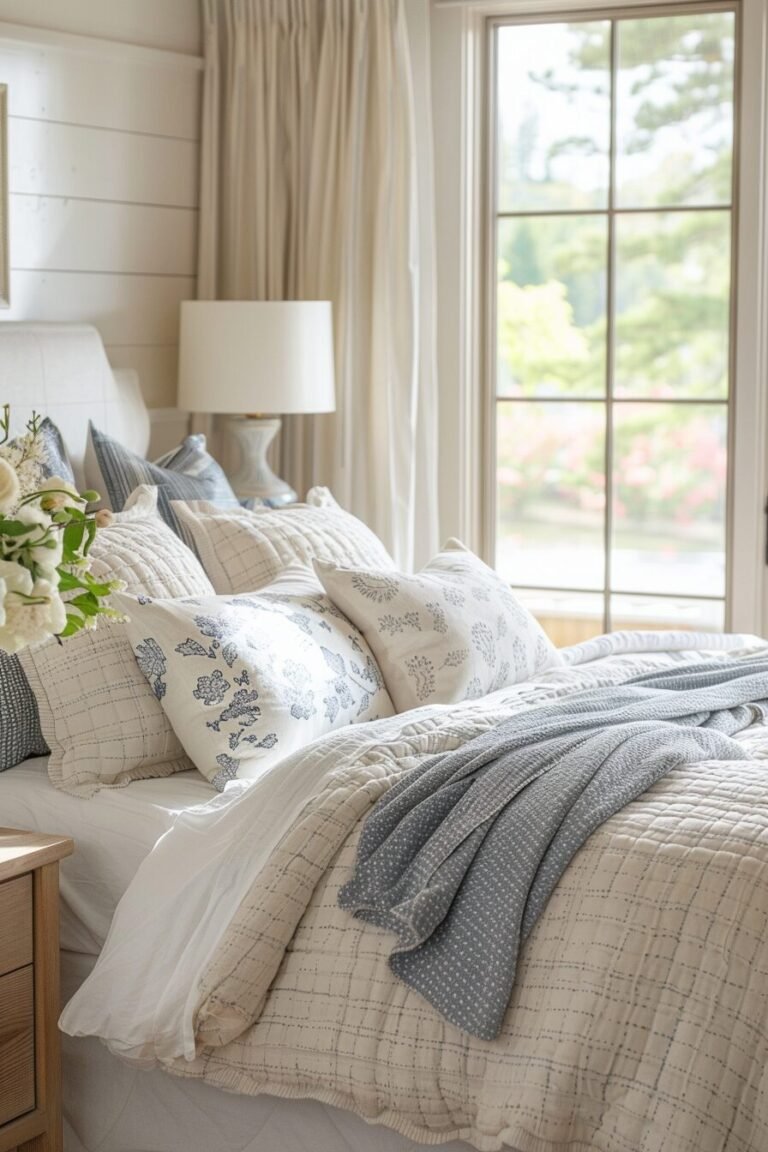
1. Hang simple linen panels at the windows.
Not heavy drapes. Not blinds that block everything out. Just unpretentious linen curtains in a warm cream or oatmeal shade that lets afternoon light filter through.
A room that breathes feels completely different from one that doesn’t.
2. Lay a worn-looking runner between the sink and stove.
A vintage-patterned or softly striped runner rug underfoot changes how the kitchen feels to move through. Hard tile is practical. Hard tile with a rug is welcoming.
3. Keep cloth napkins in a basket on the counter.
Swap the paper roll for cloth ones tucked into a small basket nearby. It’s one of those micro-upgrades that quietly raises the tone of every meal without any effort.
Small Details That Carry the Whole Room
4. Keep the greenery understated and real.
One herb on the sill. A single trailing vine on the shelf. That’s it. Farmhouse style has always favored restraint, and living plants belong in it — just not too many.
5. Prop a collection of wooden cutting boards against the backsplash.
A few pieces in different sizes and wood grains fill visual dead space without trying. Cutting boards are decor that also does dishes. That’s the farmhouse ideal.
6. Hide the trash can in a pull-out cabinet.
Removing one visible bin from the room does more for the aesthetic than most decorative purchases. Less visual noise = more atmosphere.
7. Keep a well-used cast iron skillet on the stove.
Whether it hangs or rests on the burner, a cast iron skillet communicates something no purchased decoration ever could: that someone cooks here. That this kitchen is used.
8. Tuck a small wooden step stool into a corner.
It reaches high shelves. It holds a plant. It gives a child somewhere to stand while watching you cook. A wooden step stool earns its spot in a way purely decorative items rarely do.
Foundation Pieces That Shape the Whole Space
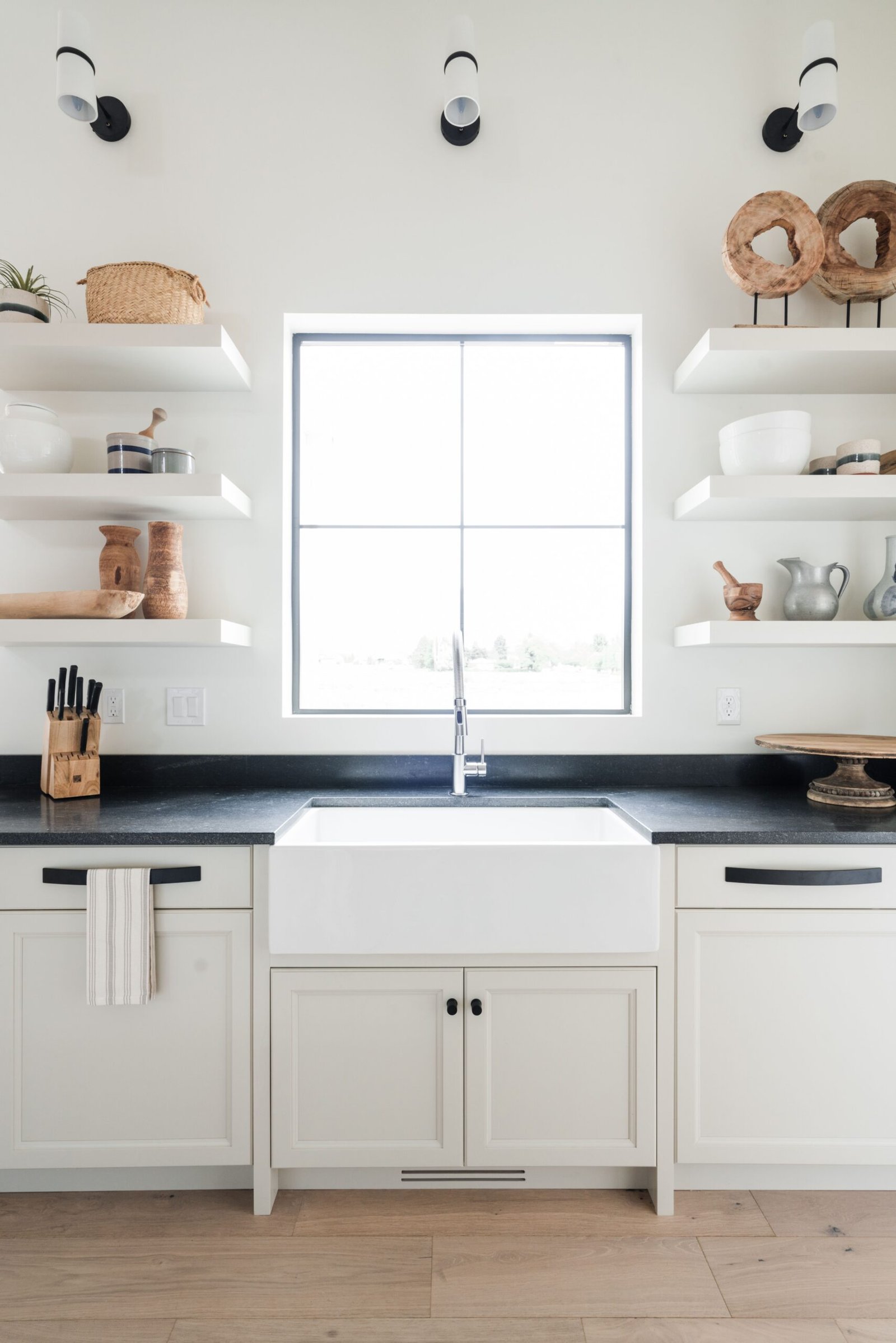
9. Anchor the kitchen with a deep apron-front sink.
Nothing reads “farmhouse” more clearly than a proper apron-front farmhouse sink in fireclay or cast iron. It shifts the entire room’s mood — and handles oversized pots without complaint.
10. Paint your cabinets a warm, off-white shade.
Avoid anything too bright or clinical. Farmhouse white leans toward cream, linen, or antique tones. That warmth in the base color is what lets everything else work.
11. Add butcher block to at least one counter section.
The island top, a prep corner, a slice of counter near the range — walnut or maple brings immediate warmth. It also gets more beautiful with age, not less.
12. Panel the island front with beadboard.
Paintable, affordable, and remarkably effective. A few panels with trim and a coat of paint transforms a plain box into something that looks like it belongs in a farmhouse kitchen catalog.
13. Choose subway tile in a quiet, unexpected color.
The classic shape says country kitchen. A soft green, muted gray, or chalky blue says yours. That distinction matters if you want it to feel personal rather than generic.
The Island: Where the Kitchen Lives
14. Pick a furniture-style island over a built-in one.
Turned legs. A slightly antiqued finish. A tone that sets it apart from the surrounding cabinetry. A furniture-style island like this looks earned rather than installed.
15. Style the surface with signs of real use.
A cutting board resting at an angle. A crock of wooden utensils. A dish towel folded over the edge. Not styled — lived in. There’s a meaningful difference.
16. Pull up mismatched seating around it.
Coordinated stools look neat. Mismatched ones look like they’ve gathered over time — which is exactly the story a farmhouse kitchen should tell.
Hardware and Fixtures: The Room’s Quiet Grammar
17. Replace cabinet hardware with something darker and heavier.
Bin pulls. Cup pulls. Solid knobs in matte black or oil-rubbed bronze. These swaps are inexpensive and they shift the entire character of your cabinetry — like changing your shoes before heading out.
18. Install an industrial-feeling pendant over the island or sink.
Galvanized. Black iron. Something with weight and a rough edge. A metal pendant light should look like it has seen some use, not like it just left a showroom.
19. Swap in a bridge-style faucet.
Two separate handles joined by a visible arc. It’s an old design, and that’s the point. Replacing your faucet with a bridge-style model is one of those changes that makes your kitchen feel considered from the inside out.
20. Hang iron or brass hooks under the upper cabinets.
For mugs. For towels. For a spatula that keeps ending up in the wrong drawer. Hooks are the farmhouse kitchen’s signature move — functional and beautiful at once.
Organized but Never Sterile
21. Mount a plate rack and actually use it every day.
Ironstone. Speckled stoneware. Mismatched hand-thrown pieces. A wall-mounted rack makes your dishes part of the room’s design without turning them into museum objects.
22. Use natural baskets to corral countertop clutter.
Fruit. Bread. Onions. The things that always end up loose on the counter. A woven basket gathers them, adds texture, and makes the organized version look better than the messy version.
23. Hang cookware on a wooden pegboard.
Painted to blend with the wall, with the most-used pots and pans hanging at reach. It’s efficient, it’s honest, and it connects your kitchen to a tradition where form and function weren’t separate things.
24. Decant pantry staples into glass jars.
Flour. Oats. Sugar. Rice. Lined up in matching glass jars with handwritten labels, they turn a utilitarian pantry shelf into something that actually looks considered.
Walls and Surfaces That Add Character
25. Swap upper cabinets for open shelving.
Open shelves reduce visual heaviness and invite you to curate rather than just store. Keep them spare — a stack of plates, a jar, a book. Space is part of the design.
26. Add shiplap behind the stove as a single accent wall.
Painted to match or slightly softer than the rest of the room. Shiplap whispers farmhouse rather than broadcasting it — which is exactly what a well-edited space does.
27. Install ceiling beams, real or well-made faux.
They give the room age and weight. Reclaimed wood is the ideal. Quality faux beams deliver the same visual effect at a fraction of the cost and effort.
28. Run board-and-batten along the lower portion of a wall.
From the floor to chair-rail height, painted white or warm gray. It adds quiet depth to eat-in areas and farmhouse character to rooms that otherwise feel flat.
29. Paint one wall a grounding earthy tone.
Sage. Clay. Washed denim. One quiet wall gives the room dimension. An all-white kitchen is clean. One warm accent wall makes it feel inhabited.
The Table as the Heart of the Kitchen
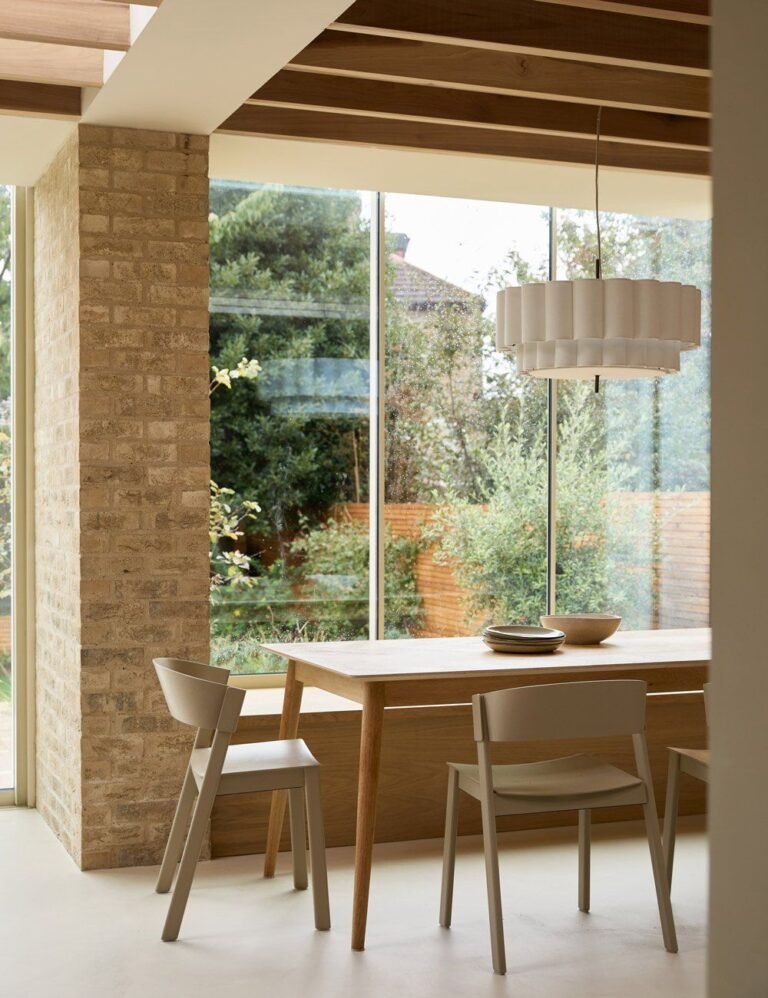
30. Build a corner bench seat into an unused wall.
With cushions, a few pillows, and a simple wood table pulled close. That corner becomes the coziest spot in the house — the kind where kids do homework and adults linger over coffee.
31. Put up a round, old-fashioned clock.
Something slightly oversized. Slightly worn. A round enamel wall clock anchors a bare wall and sets a tone — unhurried, settled, at ease.
32. Keep a wooden tray on the table permanently.
Salt and pepper. A small candle. Something seasonal and simple. A wooden tray sitting there always makes the table feel like it’s expecting someone — which is exactly what a good kitchen should feel like.
The Goal Is Realness, Not Perfection
The kitchens that actually feel good to be in aren’t the ones that look staged.
They’re the ones with a worn spot on the counter from years of chopping in the same place. The drawer that sticks a little. The shelf that holds too many things and somehow still looks right.
That’s what you’re building toward. Not a photoshoot. A place where life settles in and stays.
Pick a few things from this list. Start with what’s easiest. Come back for more when you’re ready.
The goal isn’t a finished kitchen. The goal is a kitchen that finally feels like yours.