Give That Forgotten Corner a Second Life With the Perfect Floor Lamp
Disclosure : This post may contain affiliate links or paid partnerships. I may earn compensation if you click a link or make a purchase, at no additional cost to you. See my disclosure for more info.
It catches your eye every morning.
That bare corner in your living room — the one that feels like an unfinished sentence, hanging in the air every time you walk past it.
You’ve tried ignoring it. You’ve spent late nights scrolling through design inspiration boards, bookmarking ideas that never quite make it off the screen. You even thought about shoving something — anything — into that space just to make the feeling stop.
But you know the truth.
That neglected corner is pulling your whole room down, and no amount of throw pillows artfully arranged on the sofa can redirect attention away from it.
Here’s what nobody mentions: an unfurnished corner doesn’t just look incomplete. It makes the entire room feel that way. That quiet dissatisfaction? It lingers every time you sit down to relax or welcome guests.
The solution doesn’t require demolition or a designer’s invoice.
You need the right floor lamp.
Not just any floor lamp — the wrong one will compound the problem. The right one, placed intentionally, turns that overlooked corner into the most purposeful spot in your home.
Here’s how to get there.
Why That Corner Quietly Drains the Energy From Your Room
Let’s get honest about what’s actually happening here.
You put real thought into your furniture selections. You chose a rug you were proud of. Perhaps you repainted an accent wall or rearranged everything twice to get the layout right.
But that corner? It got left behind. Time ran out, or inspiration did, or the budget did. And now it sits there like an ellipsis at the end of an otherwise finished sentence.
Here’s the design reality that interior stylists don’t talk about enough: corners anchor the visual energy of an entire room. Every well-composed space you’ve ever admired has intentional corners. Not accidental ones.
An unaddressed corner creates visual restlessness. Your gaze sweeps the room and stumbles there, unable to settle. The space feels off in a way that’s hard to articulate but impossible to ignore.
That low-level dissatisfaction isn’t you being fussy.
It’s your instinct recognizing an incomplete composition.
A floor lamp resolves it with elegant efficiency. It adds vertical presence, warmth, and a clear focal point that draws the eye upward and out, making the space feel simultaneously larger and more inviting.
But the lamp has to be right for the space.
The Mistake That Makes Corner Lighting Go Wrong
Before diving into specific styles, let’s address the error that trips most people up.
They shop with their eyes instead of their context.
A lamp photographed beautifully in a clean, minimal Nordic apartment will feel completely out of register in a rich, warm, mid-century living room. The lamp isn’t wrong. The pairing is.
The second trap is scale blindness.
A slender, delicate lamp beside a deep sectional sofa looks apologetic. An oversized industrial column lamp beside a petite accent chair looks combative.
The floor lamp needs to match the scale and spirit of the corner it occupies.
Keep that in mind as you read through the styles below. Each one is excellent in the right setting and disastrous in the wrong one.
1. The Arc Floor Lamp: Sculptural Elegance That Commands Attention
If you want a single piece that shifts the entire visual weight of a room, start here.
An arc floor lamp features a sweeping curved arm that projects outward, delivering light away from the base. Think of it as pendant lighting that needs no ceiling attachment.
It’s particularly effective behind sofas or beside reading chairs. The arc traces a canopy of light overhead, creating intimacy without compression.
The essential rule: the arc should reach over something with purpose. A sofa cushion. A side table. A reading chair. An arc lamp dangling over empty floorboards is a beautiful object solving no problem.
Arc lamps pair naturally with low, streamlined furniture. Modern sectionals, sleek mid-century sofas — these silhouettes let the lamp’s drama breathe.
One practical note: arc lamps demand a weighted base for stability. If you have young children or energetic pets, verify the base is broad and heavy before purchasing.
2. The Tripod Floor Lamp: Effortless Character in Any Corner
There’s a quiet confidence to a well-chosen tripod lamp that instantly signals a room has been thought about.
The three-legged silhouette — evoking an artist’s easel or a vintage camera stand — adds personality and visual interest without crowding the space.
The versatility is real. Warm wood legs complement Scandinavian or boho aesthetics. Matte metal legs slide into industrial or contemporary rooms without any friction.
What makes tripod lamps particularly valuable is their self-sufficiency. Unlike statement lamps that need supporting accessories, a tripod holds its own visually — you don’t need a side table or surrounding objects to make it work.
Placement tip: orient the lamp so one leg points toward the wall and two face the room. This creates a more grounded visual stance and prevents the lamp from looking unstable near the baseboard.
In a narrower corner, tripods are forgiving — the splay of the legs adds stability at floor level while the upper profile stays compact.
3. The Torchiere: Raising the Perceived Height of Any Room
You know that room that stays dim and heavy regardless of what you do?
A torchiere changes the equation entirely.
By projecting light upward toward the ceiling and letting it diffuse back down, this style creates ambient illumination that spreads evenly across the whole space — mimicking natural overhead light without any wiring.
For corners in rooms without ceiling fixtures, or spaces with ceilings that feel low, a torchiere is quietly transformative. The upward-cast light visually lifts the ceiling and brightens every corner of the room, not just the one where the lamp stands.
Modern versions feature dimmable LED settings, so you can dial up brightness during the day and soften the atmosphere at night.
The critical placement rule: never position a torchiere beneath a dark or heavily pigmented ceiling. The light needs a pale surface to reflect from. A white or off-white ceiling amplifies the effect dramatically.
4. The Pharmacy Floor Lamp: Quiet Utility, Understated Style
Few floor lamp styles are as underappreciated as this one.
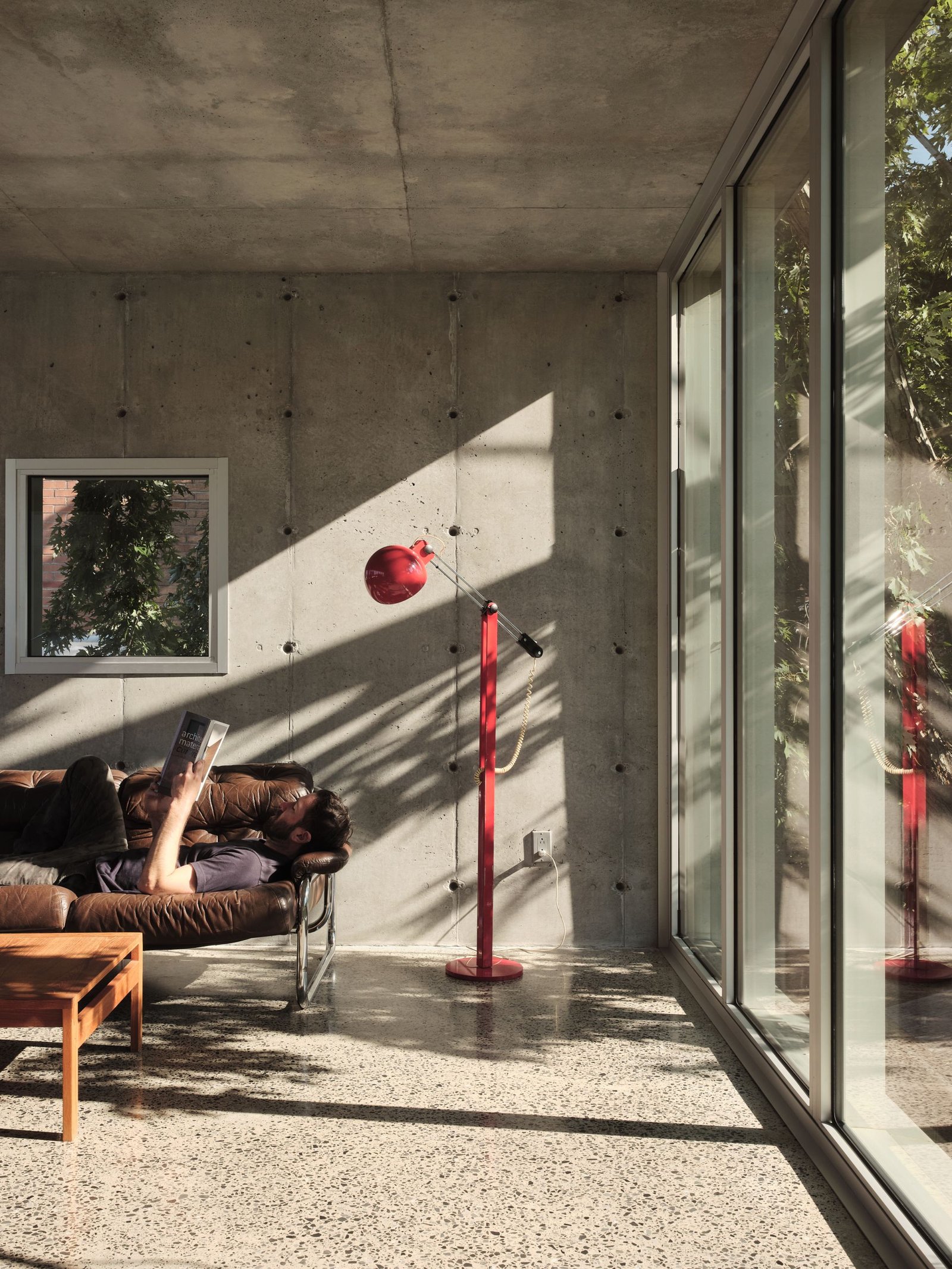
A pharmacy lamp — also known as a task lamp — has an articulating arm and adjustable shade that lets you direct light with real precision.
Designed originally for clinical environments, pharmacy lamps crossed into residential design decades ago and never left. Interior designers reach for them in reading corners, home libraries, and creative workspaces.
If the empty corner in question sits beside a chair where you read, draw, or work on projects, a pharmacy lamp delivers focused, controllable light exactly where you need it — without washing the whole room in brightness.
It’s slim, purposeful, and looks more deliberate than almost any other floor lamp style at the same price point.
Styling note: pharmacy lamps land best when they’re given context — a small side table nearby, a stack of books, a mug on a coaster. Their task-oriented design becomes an asset when there’s something nearby that benefits from the attention.
5. The Statement Sculptural Lamp: Art That Happens to Illuminate
Some corners don’t need better light.
They need something worth looking at that also glows.
Sculptural floor lamps prioritize form over function — twisted silhouettes, unexpected geometries, organic shapes that belong in a gallery as much as a living room.
These aren’t your primary light source. They’re the piece that makes a guest stop mid-sentence and ask where it came from.
One caveat: sculptural lamps require restraint. Choose one bold variable — an unusual form OR an unusual material OR an unusual color — and anchor everything else in neutrality. Stacking all three elements produces chaos rather than character.
One strong choice reads as confidence. Three strong choices compete with each other and lose.
6. The Shelf Floor Lamp: Lighting and Storage in One Footprint
For the corner that’s both empty and surrounded by rooms that have run out of shelf space, this is a particularly intelligent solution.
A shelf floor lamp integrates storage platforms into the lamp’s vertical column, giving you illumination and display space without claiming extra square footage.
In compact apartments and smaller rooms, this efficiency matters enormously.
A few books on one shelf. A small potted succulent on another. A framed photo tucked beside the base. Suddenly the corner has dimension, texture, and a story to tell.
The styling rule that makes it work: leave some shelves empty. Filling every surface makes the lamp look like a cluttered display rather than a curated one. White space is essential — let the lamp breathe around its objects.
7. The Rattan or Woven Floor Lamp: Texture That Transforms the Mood
If your room’s foundation is natural materials — wooden furniture, linen upholstery, terracotta tones — a rattan or woven lamp doesn’t just fit. It belongs.
When illuminated, the weave filters light into warm, dappled patterns across surrounding walls. The effect is calming, organic, and genuinely difficult to replicate with any other lamp style.
These work especially well in bedrooms, sun-soaked rooms, and spaces with a relaxed, layered aesthetic.
One expectation to set: woven shades scatter light softly rather than directing it. You’re getting atmosphere, not task lighting. If reading is the priority, supplement with another source. If pure mood is the goal, nothing beats it.
Pair it with a floor cushion and a low wicker basket and the corner becomes a destination rather than a dead zone.
How to Match the Right Lamp to Your Specific Corner
This is where decisions go sideways. People fall for a lamp and buy it without assessing what the corner actually needs.
Run through these questions before you commit:
What role does this corner need to play? Task lighting? Ambient glow? Purely visual presence? Your answer determines which lamp category to consider.
What’s the ceiling height? Generous ceilings welcome arc lamps and torchieres. Lower ceilings call for pharmacy lamps or moderate-height tripods.
What is the room’s dominant material and tone? Your lamp should feel like it grew from the same soil as your furniture, not arrived from a different planet.
How wide is the space? Measure the corner before you shop. Arc lamps and tripods need floor clearance. Shelf lamps and pharmacy lamps work in tighter spots.
Five minutes of honest assessment saves you from the frustration of a return and a corner that looks worse than it did before.
The Trick Designers Use to Make Any Floor Lamp Look Expensive
There is one technique that separates rooms that look decorated from rooms that look designed.
Light layering.
A floor lamp standing alone in a room looks like a patch job. That same floor lamp alongside a table lamp across the space — and candles or a low lamp nearby — looks intentional.
Your corner lamp is not a solo performance. It’s the anchor of an ensemble.
Think of the layers: floor lamp high, table lamp mid, candles low. That vertical distribution of light creates visual depth that elevates the entire room — and makes your corner feel like it was planned from the start.
The floor lamp sets the foundation. Everything else builds on top of it.
Your Corner Has Waited Long Enough
That corner has been gathering visual debt long enough.
You don’t need a full redesign. You don’t need weeks of deliberation. You need one well-chosen floor lamp that fits the scale, mood, and function of that particular spot.
Choose the style that resonates with your room’s personality. Measure the space. Be honest about the light you actually need.
Then place it — and watch how the whole room recalibrates around it.
Because the truth is this: the right floor lamp doesn’t just occupy a corner.
It finishes a room.
And the moment it does, you’ll realize the fix was simpler than you ever thought it would be.
Your corner is ready. Go light it.