43 Modern Front Door Ideas to Refresh Your Entry in Style This Season
Disclosure : This post may contain affiliate links or paid partnerships. I may earn compensation if you click a link or make a purchase, at no additional cost to you. See my disclosure for more info.
You’ve been staring at your front door again, haven’t you?
Not with pride. More like that slow, creeping sense of embarrassment when you pull into the driveway and think, “This looks… exhausted.”
The paint is chipping. The hardware is stuck in 2007. The whole entryway practically whispers “we gave up caring somewhere after the second kid.”
And the worst part? You see it every single day. Every time you wrestle with your keys. Every time a delivery driver photographs your sad porch for the app. Every time a neighbor installs something fresh and modern across the street and you pretend not to notice.
But you notice.
You always notice.
Here’s what most people never tell you about curb appeal: your front door is the handshake of your home. It’s the first impression people form. Before they step inside your kitchen. Before they catch a glimpse of your floors. Before they smell the candle you lit in a panic ten minutes before they arrived.
And right now? That handshake is weak.
That changes today.
I’ve put together 43 modern front door ideas that will genuinely transform the way your home presents itself — from the street, from the porch, and from the inside looking out.
No filler. No ideas that demand a second mortgage. Just honest, actionable inspiration you can actually use this season.
Let’s get into it.
Bold Colors That Actually Work (Yes, Even on Your House)
Most homeowners default to black or white for a front door. Safe. Predictable. Easy to forget.
There’s nothing wrong with either — unless you actually want your home to stand out from the rest of the street.
1. Deep matte black with brass hardware. This pairing is the little black dress of front doors. Timeless, precise, and endlessly refined. It works on almost any exterior palette.
2. Warm terracotta. Earthy, unexpected, and genuinely stunning against white or cream siding. It reads as modern without overthinking it.
3. Forest green. This shade has been quietly taking over design publications for good reason. It pairs beautifully with natural wood, stone, and exposed brick.
4. Navy blue with a satin finish. Rich, grounded, and somehow both commanding and restrained. It says “we follow design trends but don’t announce it.”
5. Dusty sage. Softer than forest green, calmer than mint. It reads as refreshing for spring and doesn’t beg for attention.
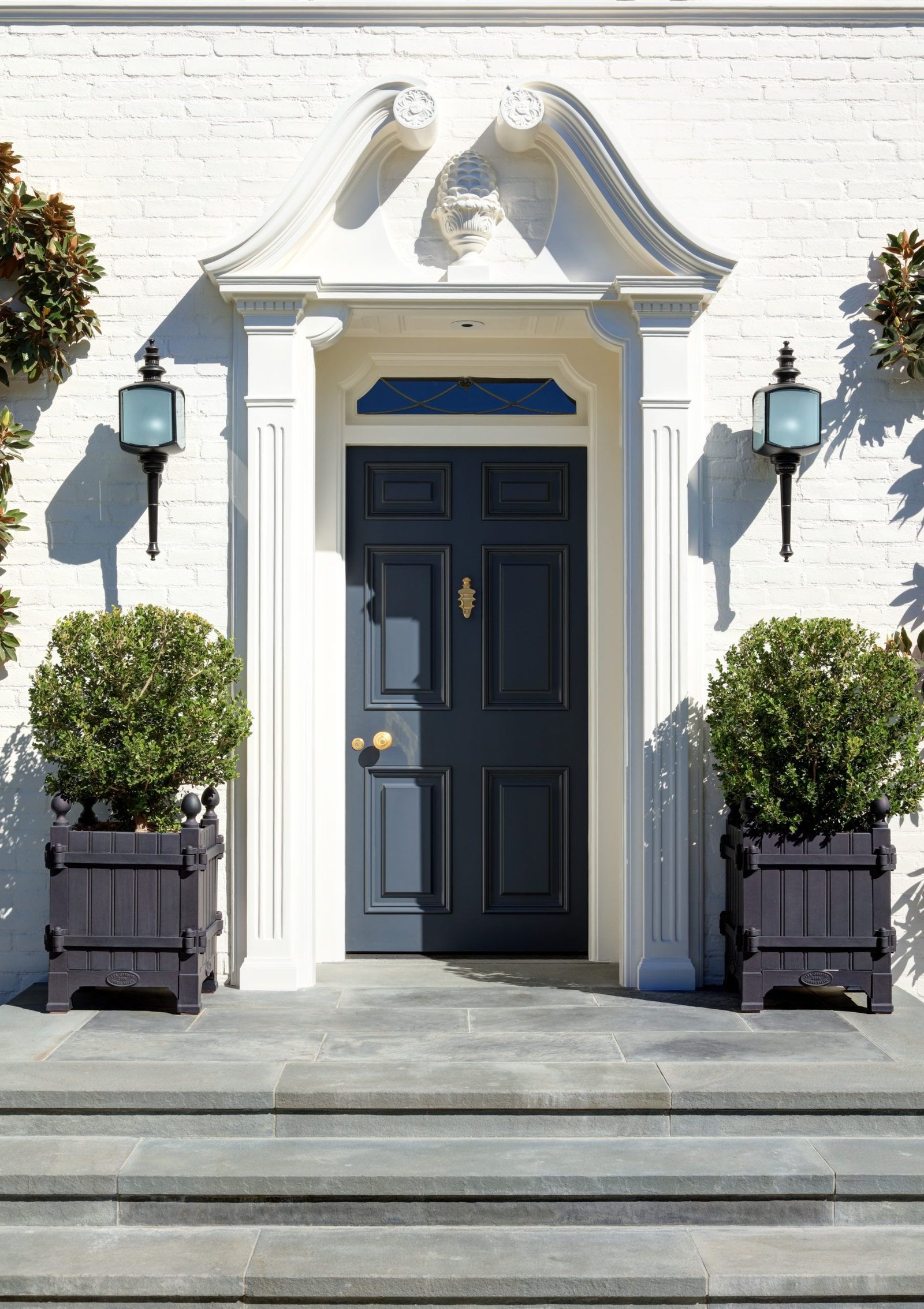
6. Charcoal gray. When black feels too stark for your exterior, charcoal is the perfect compromise. Moody. Polished. Forgiving to maintain.
Pro tip: always test your chosen paint color on the real door in natural daylight. What looks flawless on a swatch inside a hardware store can look entirely different at 3pm on a south-facing porch. Trust the sunlight — not the fluorescent aisle.
Pivot Doors — The Statement You Didn’t Know You Needed
If you’ve ever stepped into a high-end hotel lobby or upscale restaurant and felt that the entrance just worked differently, odds are there was a pivot door involved.
7. Oversized wood pivot door. These rotate on a central hinge rather than a side hinge, producing a dramatic sweeping movement. They make any entryway feel grand — even on a modest footprint.
8. Steel-framed glass pivot. Industrial, airy, and unmistakably modern. The slim steel frame lets natural light flood in while making a serious architectural statement.
9. Black aluminum pivot with sidelight. If you want the drama of a pivot with some degree of privacy, frosted or ribbed glass sidelights deliver exactly that.
Reality check: pivot doors are not inexpensive. They require specific structural reinforcement and professional installation.
But if your entry is the one thing that bothers you daily — and you plan to stay in your home — this is the kind of upgrade that changes how you feel walking into your own space. That’s worth more than most renovations.
Glass and Light — Because Dark Entryways Feel Oppressive
You know that corridor right behind your front door? The one that always feels like a cave no matter how many light fixtures you add?
Your door might be the culprit.
10. Full-lite glass door with a slim frame. Maximum light, minimal visual barrier. If privacy isn’t a concern, this is the fastest route to brightening a dark foyer.
11. Half-lite panel with frosted glass. You gain the light without the fishbowl feeling. Nobody on the pavement can see your heap of shoes inside.
12. Sidelights flanking a solid door. Keep your solid door if it serves you — just add narrow glass panels on one or both sides. Instant brightness without a full replacement.
13. Transom window above the door. A horizontal glass strip above the frame. It floods the entry with natural light even when the door is shut. A classic architectural device with a very modern payoff.
14. Ribbed or reeded glass insert. This is having a real moment right now. Light filters through with a gorgeous textured diffusion. Stylish. Private. Distinctly contemporary.
Mistake to avoid: don’t go full clear glass if your door faces directly onto a busy footpath or sits close to a neighbor’s windows. You’ll be taping a towel over it within the week. Be honest about how exposed your entry actually is before choosing transparency over texture.
Modern Wood Doors That Feel Warm, Not Dated
Wood gets a bad reputation in modern design circles. People hear “wood front door” and immediately picture a stained oak slab from 1993 complete with a brass lion-head knocker.
Let go of that image. Modern wood doors are an entirely different proposition.
15. Vertical plank white oak. Clean lines, visible grain, warm undertones. Properly sealed, it only gets better with age.
16. Walnut slab with a concealed frame. Dark, dramatic, and genuinely sleek. Walnut carries a depth of tone no paint can replicate.
17. Teak with horizontal slats. The slats introduce visual rhythm and surface texture. Teak is naturally moisture-resistant, making it one of the strongest choices for exterior applications.
18. Light maple with a flush panel. If you want a Scandinavian-influenced aesthetic — minimal, clean, light-toned — maple is the answer.
19. Reclaimed wood with a contemporary silhouette. Historic material, fresh form. The natural imperfections in reclaimed timber create a character that factory-produced doors simply cannot replicate.
A word of caution: wood demands maintenance. Full stop. If you’re not prepared to refinish or reseal every few years depending on your climate, consider a fiberglass door with a convincing wood-grain texture. No shame in that. It looks convincing and forgives neglect.
Hardware Upgrades That Cost Little but Change Everything
You don’t always need a new door. Sometimes what you actually need is new accessories for the one you already have.
Think about it. You wouldn’t pair a carefully chosen outfit with rusted accessories, right?
20. Matte black lever handle. Clean, modern, affordable. Replacing an outdated knob with a sleek lever takes under twenty minutes and transforms the overall appearance.
21. Brushed brass pull bar. A long vertical pull bar immediately makes a door look more considered and architectural. This single change can take a builder-grade entry into designer territory.
22. Integrated smart lock with a keypad. No more key-fumbling. Clean profile. Some models are so minimal you barely register them. Functionality married to form.
23. Oversized black house numbers. Mounted beside or above the door, large-format numerals in a modern typeface create an immediate design moment. Under twenty dollars on most platforms.
24. A matte black mail slot. If your style leans European or mid-century, a built-in mail slot is a chic functional detail most people overlook entirely.
Don’t forget your hinges — they’re part of the hardware story. Swapping old brass hinges for matte black finishes completes the look from end to end.
Never underestimate the power of these small swaps. Hardware is the most affordable renovation with the highest visible return. Replace the tired elements first. You may not even need a new door at all.
Double Doors for When You Want to Make an Entrance
There’s a reason every movie character who “made it” opens double doors to their home.
It’s the universal signal that says: something good waits inside.
25. Black steel-and-glass French doors. Industrial chic at its most refined. They fill the foyer with light and look stunning from both directions.
26. Slim-profile double pivot doors in oak. The combination of a double entry with pivot hardware is breathtaking. Not right for every home, but when the proportions allow it, it’s unforgettable.
27. Arched double doors with fluted glass. The arch softens the modern geometry. The fluted glass adds layered texture. Together they create something elegant without being stuffy or traditional.
28. Asymmetrical double doors. One wider panel, one narrower. Unexpected, contemporary, and surprisingly practical — the narrower side handles everyday use while the full width opens for occasions.
One consideration: double doors require a wider rough opening. If you’re retrofitting, verify your structural situation before committing to a pair that won’t fit without serious framing work.
Minimalist Entries — When Less Really Is More
Sometimes the most powerful thing a front door can do is disappear into the facade.
29. Flush door with no visible frame. The door sits perfectly flush with the surrounding wall. When closed, it reads almost as part of the exterior cladding. Quietly extraordinary.
30. Handle-free entry with a push-pull mechanism. No hardware at all. You push to open, pull to close. Radical simplicity executed well.
31. Monochrome door matching the exterior wall finish. Same shade, same texture. The door recedes. The architecture steps forward. Works especially well on modern builds with strong geometric proportions.
32. Solid door with a single slim vertical window. One narrow glass strip, positioned slightly off-center. It breaks the flatness just enough without cluttering the surface.
33. Concrete-look composite door. For ultra-contemporary homes, a door that replicates raw concrete creates a genuinely brutalist edge. It’s not universally appropriate. But when it fits, it really fits.
Minimalism isn’t about stripping away everything. It’s about keeping only what earns its place. If your exterior has strong bones — good proportions, interesting materials — a quiet door lets those features carry the conversation.
Mid-Century Modern Doors That Never Go Out of Style
Mid-century design has been “making a comeback” for roughly two decades now. At this point, it simply never left.
34. Geometric cutout panels. Angular shapes — rectangles, diamonds, starburst patterns — either cut into the door surface or inlaid with glass. Pure retro magic done with intention.
35. Single door with a bold color and starburst hardware. A yellow or orange door paired with a sunburst knocker? That’s not nostalgia. That’s conviction.
36. Tongue-and-groove vertical plank in teal. Teal was the definitive mid-century door color. With a simple round knob and slim house numbers, it’s effortlessly iconic.
37. Flat panel with three stacked square windows. Symmetry. Restraint. A design that was innovative in 1958 and still reads as fresh today.
If your home was built between the 1940s and 1970s, leaning into the original architectural vocabulary with your front door is almost always the right move. Don’t fight the bones of your house. Work with them.
Front Door Surrounds That Frame the Whole Experience
The door itself is only one part of the story. What surrounds it matters just as much.
38. Board-and-batten accent wall around the entry. Extending vertical panel cladding around the door frame creates a focal point visible from the curb.
39. Stone or porcelain tile surround. Cladding the area immediately around your door in a contrasting material — stacked stone, oversized tile — introduces depth and visual weight.
40. Painted accent frame in a contrasting tone. White house, black door frame and trim. Instant definition. Takes an afternoon.
41. Integrated planter shelves flanking the door. Built-in recesses on either side of the entry, filled with living greenery. It softens the facade and adds literal life to the space.
42. Recessed entry with overhead lighting. Setting the door back from the facade creates a sheltered alcove. Fit a modern pendant or recessed downlight, and your entry radiates warmth after dark.
43. A clean, oversized doormat. Genuinely. A generous mat in a neutral palette grounds the entire entrance and ties everything together for less than the cost of lunch.
So Where Do You Actually Start?
You’ve just worked through 43 ideas. Your head is full. Your Pinterest board is about to need a new section.
But here’s what most design guides won’t say.
You don’t need to tackle everything at once.
Find the one thing that bothers you most. Is it the color? Address that first. Is it the hardware? Swap it this weekend. Is it the lack of natural light in your hallway? Explore a glass door option.
One change. Done well. This season.
That’s how homes genuinely improve. Not through sweeping, expensive, overwhelming overhauls. But through deliberate, well-considered moves you actually follow through on.
Your front door is the first promise your home makes to the world. Make it one worth keeping.
Now go build an entry you’re actually glad to walk through every day.