Modern Japandi Interior Tips to Calm the Chaos at Home
Disclosure : This post may contain affiliate links or paid partnerships. I may earn compensation if you click a link or make a purchase, at no additional cost to you. See my disclosure for more info.
Be honest.
You come home after a long day. You drop your bag. You look around.
And the first thing you feel is… more stress.
Piles of stuff on the counter. Mismatched cushions screaming at each other. A coffee table buried under magazines, remote controls, and yesterday’s mail.
You thought decorating your home would make it a sanctuary. A place to breathe.
Instead, it feels like your living room is arguing with you.
And the worst part? You’ve tried. You’ve scrolled Pinterest until your thumbs went numb. You’ve bought the throw pillows. You’ve rearranged the furniture three times in one weekend.
But nothing clicks.
Here’s the truth.
The problem isn’t that you lack taste. The problem is that most Western decorating advice adds more. More color. More accessories. More “statement pieces.”
Meanwhile, what your brain is begging for is less.
That’s exactly what Japanese interior design delivers. Not emptiness. Not cold minimalism that looks like a hospital waiting room.
Something far more powerful: intentional calm.
And you don’t need to gut your house to get it. You don’t need a massive budget. You don’t even need to buy a single piece of furniture right now.
You just need to understand the principles. And then apply them, one room at a time.
Ready? Let’s get into it.
Why Your Home Feels Chaotic (Even When It’s “Clean”)
Here’s something most people never consider.
A room can be spotless and still feel loud.
That’s because visual noise is real. Every object in your field of vision demands a tiny piece of your attention. Your brain processes it whether you realize it or not.
Ten decorative items on a shelf? That’s ten small demands on your mental bandwidth.
A patterned rug clashing with patterned curtains? Your brain is working overtime trying to make sense of it.
Japanese design understood this centuries ago. The philosophy isn’t about having nothing. It’s about having only what matters.
Big difference.
The Core Philosophy Behind Japanese Interiors
Before you change a single thing in your home, you need to understand three Japanese concepts that drive everything.
Skip these, and you’ll end up with a room that looks “Japanese-ish” but still feels wrong.
1. Ma (間) — The power of empty space
In Western design, empty space feels like a problem to solve. A blank wall needs art. An empty corner needs a plant stand.
In Japanese design, empty space is the design. It’s not wasted. It’s breathing room for your eyes and your mind.
2. Wabi-sabi — Beauty in imperfection
That slightly uneven handmade ceramic bowl? That’s not a flaw. That’s the point.
Wabi-sabi teaches you to stop chasing the Instagram-perfect room. Instead, you embrace materials that age well, textures that tell a story, objects that carry quiet character.
3. Kanso — Simplicity without emptiness
Kanso means eliminating the unnecessary. But it doesn’t mean stripping your home bare until it feels like a monk’s cell.
It means every object earns its place. If it doesn’t serve a function or bring genuine beauty, it goes.
These three ideas are the foundation. Everything else builds on top of them.
1. Start With a Brutal Edit of What You Own
This is the part nobody wants to hear.
You can’t layer Japanese calm onto a cluttered room. It doesn’t work. It’s like putting a fresh coat of paint on a crumbling wall.
So before you buy anything new, you remove.
Walk through each room. Pick up every decorative object. Every candle, every frame, every figurine. Put them all in a box.
Now, put back only the items that genuinely make you feel something. Not the ones you keep because they were gifts. Not the ones you keep because they were expensive.
The ones that make you feel calm. Grounded. At home.
That might be three items instead of fifteen. Good. That’s the goal.
The shelf that used to feel cluttered will suddenly feel like it can breathe. And so will you.
2. Choose a Muted, Nature-Inspired Color Palette
Look at a traditional Japanese interior. What do you see?
Whites. Warm grays. Soft beiges. Deep charcoals. The occasional muted green.
Not a neon accent wall in sight.
Here’s why this matters. Bold, contrasting colors stimulate your nervous system. They grab attention. That’s great for a restaurant trying to make you eat faster. Terrible for a bedroom where you’re trying to unwind.
A neutral, tonal palette does the opposite. It lets your eyes rest. It creates a sense of continuity from one space to the next.
You don’t need to repaint every wall tomorrow. Start small.
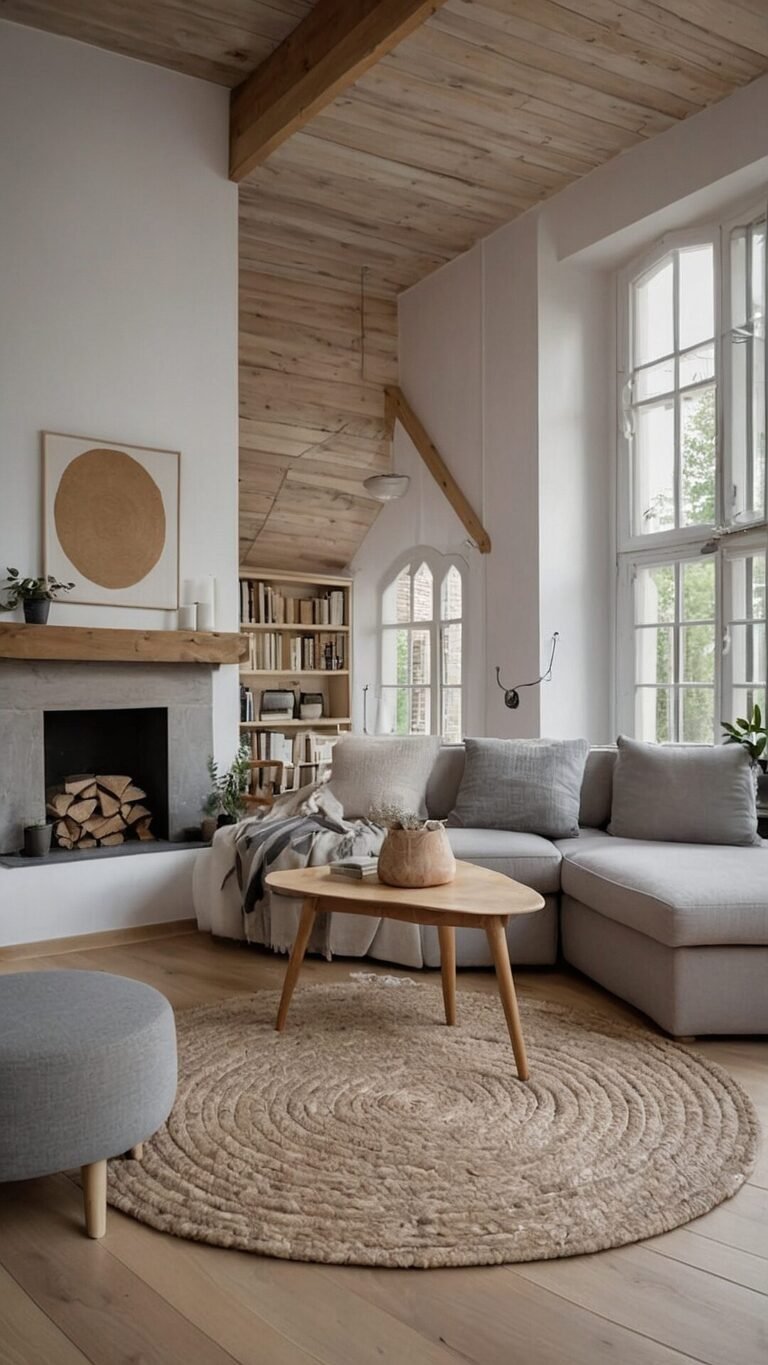
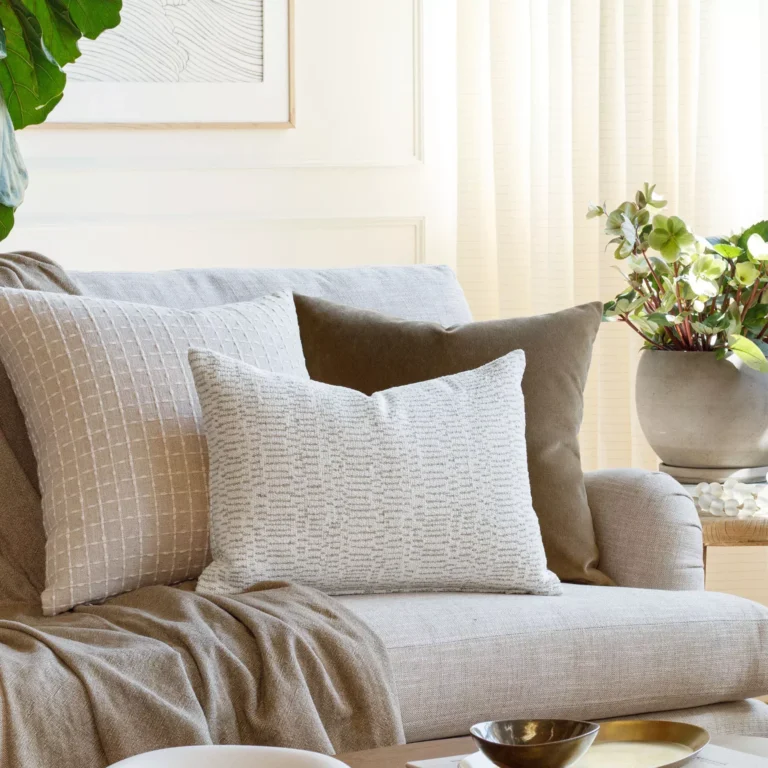
Swap out that bright throw blanket for one in oatmeal or stone. Replace colorful cushion covers with linen in muted earth tones.
You’ll feel the shift immediately.
3. Let Natural Materials Do the Talking
Japanese interiors are obsessed with natural materials. And for good reason.
Wood. Bamboo. Stone. Linen. Cotton. Ceramics.
These materials have texture and warmth that synthetic materials simply can’t replicate. They age beautifully. They connect you to nature, even when you’re sitting on your couch in the middle of a city.
Here’s the mistake people make: they buy cheap imitation wood furniture or plastic plants and wonder why their room still feels cold and fake.
Invest in real materials. A solid wood side table. A handmade stoneware vase. Linen curtains instead of polyester.
You don’t need to replace everything at once. But each time you swap a synthetic item for a natural one, your room gains depth and soul.
4. Drop Your Furniture Lower
This is one of the quickest wins, and almost nobody talks about it.
Traditional Japanese rooms use low furniture. Low tables. Floor cushions. Platform beds close to the ground.
Why?
Because lower furniture makes your ceiling feel higher. It opens up vertical space. And it creates a grounding effect — literally bringing you closer to the earth.
You don’t need to throw out your sofa and sit on the floor. But consider these shifts:
Swap a tall bed frame for a low-profile platform bed. Use a low coffee table instead of a standard-height one. Add floor cushions as extra seating in your living room.
The room will instantly feel more spacious. More open. More calm.
5. Master the Art of Soft, Layered Lighting
Here’s a design crime committed in homes everywhere: a single, harsh overhead light blasting down from the ceiling like an interrogation lamp.
Nothing kills a calm atmosphere faster.
Japanese interiors use warm, diffused lighting. Paper lanterns. Rice paper lamps. Candles. Indirect light sources that create gentle pools of warmth rather than flooding the entire room.
The principle is simple: multiple soft light sources beat one bright one.
A floor lamp with a linen shade in the corner. A small table lamp on a side table. A couple of candles on the mantle.
This layered approach lets you control the mood of the room. Bright enough to read. Soft enough to relax.
Your nervous system will thank you.
6. Bring Nature Inside (But Not the Way You Think)
Yes, plants are part of Japanese interiors. But not the way Western decor blogs tend to do it.
This isn’t about cramming seventeen potted plants onto every available surface until your living room looks like a botanical garden.
Japanese interiors use one or two carefully chosen natural elements to create a connection with the outdoors.
A single branch of cherry blossom in a narrow vase. One bonsai tree on a wooden shelf. A small arrangement of stones.
The key word is restraint. One beautiful natural element in a room has far more impact than a dozen competing for attention.
It’s the principle of Ma again. Give that single branch room to breathe, and it becomes a focal point that draws the eye and calms the mind.
7. Hide the Clutter You Can’t Eliminate
Let’s be realistic.
You have stuff. Remotes. Chargers. Kids’ toys. Paperwork. That stuff isn’t going anywhere.
Japanese interiors solve this with concealed storage. Cabinets with clean, handleless doors. Baskets tucked inside shelves. Built-in closets that keep everyday chaos out of sight.
The surfaces stay clear. The visual noise stays low. But everything you need is still within reach.
Here’s a practical move: get two or three attractive storage baskets in natural materials. Wicker. Seagrass. Woven cotton.
Place them strategically — by the sofa, near the entryway, on a bookshelf.
When life gets messy (and it will), toss the clutter into the baskets. The room stays calm. Your brain stays calm.
Simple. Effective. Underrated.
8. Create Breathing Room Between Objects
This tip alone can transform a room in ten minutes.
Go to any surface in your home. Your bookshelf. Your mantle. Your nightstand.
Now space things out.
Instead of three candles crammed together, keep one. Leave six inches of empty space around it.
Instead of books packed spine-to-spine across the entire shelf, group them in small clusters with gaps between them.
That space between objects is where the magic happens. It gives each item presence. It tells your brain: this was placed here with intention, not just dumped.
And that feeling of intention? That’s what makes a room feel designed rather than decorated.
9. Use Sliding Doors or Curtains to Define Spaces
Traditional Japanese homes use shoji screens — those beautiful sliding panels made of translucent paper and wood frames.
You probably can’t install authentic shoji screens in your apartment. That’s fine.
But you can borrow the principle.
Use a linen curtain to separate your sleeping area from your workspace. Use a simple wooden sliding door to close off a cluttered utility area.
The idea is to create flexible boundaries between spaces. Boundaries that are soft, not hard. That suggest separation without building walls.
This gives each area of your home a distinct purpose. And when each space has a purpose, the whole home feels more organized — even if the square footage hasn’t changed.
10. Treat Your Entryway Like Sacred Ground
In Japanese culture, the genkan — the entryway — is where you transition from the outside world to your personal space.
Shoes come off. The chaos of the day stays at the door.
Most Western homes treat the entryway as an afterthought. A pile of shoes. A heap of jackets. A dumping ground for keys and mail.
Flip that.
Keep your entryway minimal and intentional. A small shelf or tray for keys. A simple shoe rack or basket. A single hook for your coat.
Maybe one small object that signals “welcome home” — a plant, a candle, a piece of art.
When the first thing you see walking in the door is calm and order, it sets the tone for every room that follows.
The Mistake That Ruins Everything
Here’s where most people go wrong.
They read an article like this and rush out to buy a bunch of “Japanese-style” items. A bamboo tray here. A zen garden there. Maybe a waving lucky cat for good measure.
Stop.
Japanese design is not a shopping list. It’s a mindset.
It’s about removing before adding. It’s about choosing quality over quantity. It’s about giving every object room to exist.
If you walk away from this article and buy ten new things, you’ve missed the point entirely.
Walk away and remove ten things instead. That’s the real transformation.
Your Home Doesn’t Need More. It Needs Less — With Intention.
You don’t have to live in Kyoto to feel calm when you walk through your front door.
You don’t need a renovation. You don’t need an interior designer. You don’t need to spend a fortune.
You need the courage to let go of what doesn’t serve you. To leave space empty when everything in your culture screams to fill it. To trust that less really is more — not as a cliché, but as a lived experience.
Start with one room. One shelf. One corner.
Clear it. Simplify it. Let it breathe.
Then sit in that room and notice how you feel.
That feeling? That quiet exhale? That subtle release of tension you didn’t even know you were carrying?
That’s what Japanese interior design is really about.
And once you feel it, you’ll never want to go back to the chaos.
🔍 Focus Keyphrase: Japandi interior tips
📌 SEO Title (< 60 chars): Japandi Interior Tips to Calm the Chaos at Home
🔗 Slug (< 60 chars): japandi-interior-tips-calm-chaos-home
📝 Meta Description (< 155 chars): Discover modern Japandi interior tips to bring calm and intention to any room — no renovation needed. Start with less and transform your home today.