20 Outdoor Jacuzzi Ideas to Turn Your Backyard Into a Personal Retreat
Disclosure : This post may contain affiliate links or paid partnerships. I may earn compensation if you click a link or make a purchase, at no additional cost to you. See my disclosure for more info.
You’ve earned this.
Not theoretically — actually, tonight, after whatever today threw at you.
Imagine stepping outside, lowering yourself into hot water, and watching string lights glow overhead while every knot in your back slowly dissolves. That’s not a magazine spread. That’s a project you can build.
But right now, your backyard isn’t that place.
Maybe it’s a patch of dead grass. Maybe it’s a patio that looks fine but feels like nothing. Either way, something is clearly missing.
The good news: the gap between “ordinary yard” and “backyard retreat” is smaller than you think. It just takes the right idea and the decision to act on it.
Here are 20 outdoor jacuzzi setups that real homeowners have built in real backyards. Not aspirational renders — achievable, practical, beautiful.
Find your fit. Build it.
20 Hot Tub Setups That Deliver Real Results
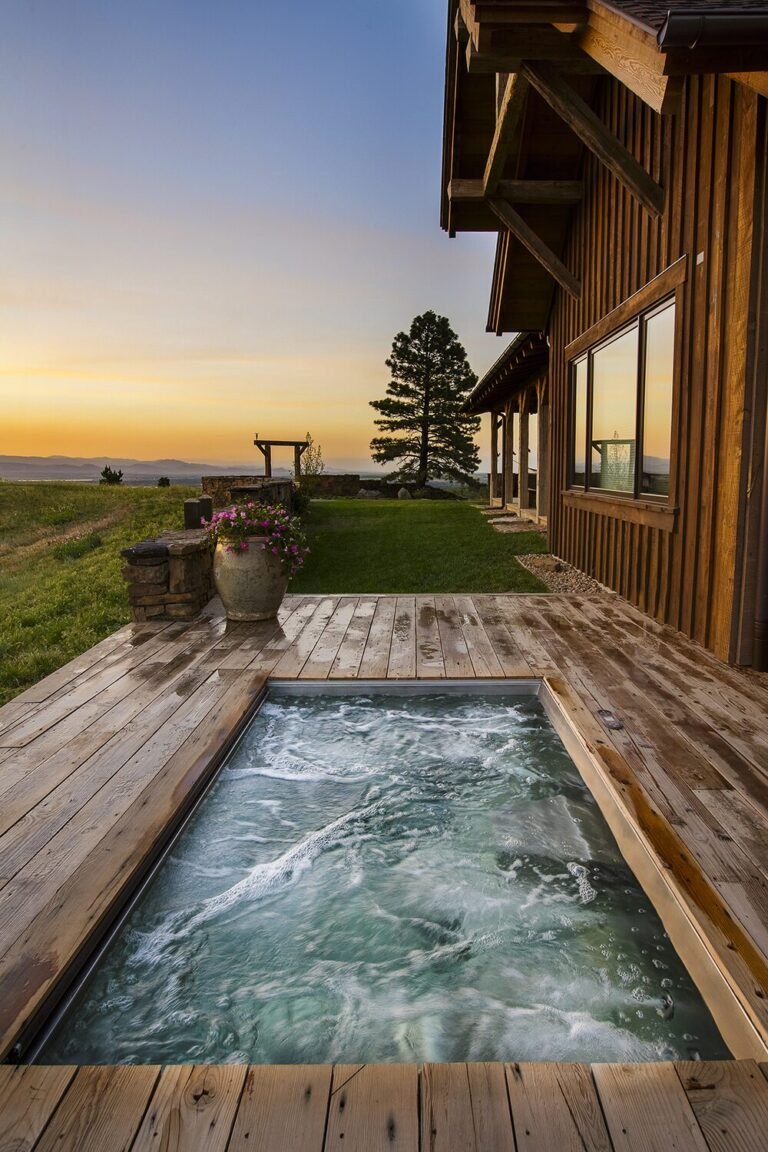
1. Flush-Set Sunken Hot Tub
Standard installation puts your jacuzzi on top of a deck. The smarter approach lowers it into the surface until the rim sits perfectly flush with the surrounding material.
The result is a setup that looks custom and built-in — like the deck was designed around the tub, not installed before it arrived. A tub on pedestals announces itself as an afterthought. A recessed tub looks permanent and planned.
Critical step: build access panels into at least one side during installation. Pumps fail. Filters clog. You’ll need to reach that equipment eventually, and tearing out the deck to do it costs far more than planning ahead.
2. Pergola-Covered Hot Tub
A pergola overhead converts a plain hot tub installation into something that feels complete and intentional.
It adds shade for summer soaks, creates a frame to hang drapes and string lights from, and visually closes the space in a way that transforms a tub into a room.
Cedar or redwood pergolas weather beautifully outdoors, developing a silver-grey patina over the years that looks better than stain. The longer you leave them, the more character they earn.
3. Stacked Natural Stone Surround
The material you wrap around your jacuzzi does more design work than almost anything else in the setup.
Skip the standard tile border. Use stacked natural stone — slate, travertine, or rough-cut flagstone — and the space transforms from “hot tub area” to “backyard destination.”
Stone handles the wet-dry cycle of a hot tub environment extremely well, ages beautifully, and creates a warmth that manufactured materials simply don’t replicate. Keep the edges irregular. Organic lines read as natural. Uniform lines read as fake.
4. Japanese-Inspired Soaking Garden
The most calming spaces tend to be the most edited ones.
A hinoki or cedar soaking tub on a gravel base, enclosed by bamboo fencing on two or three sides, with a single pruned specimen plant as the focal point. No clutter. No competing elements. Just water, material, and silence.
If your instinct is to keep adding layers, this design will fight you. Let it. What you leave out of a Japanese-inspired space is what makes it work.
5. Elevated Deck or Rooftop Installation
Moving your hot tub to a second-story deck or rooftop changes the entire experience.
You’re above the yard clutter — the hoses, the chairs, the dog toys — and you have sky, air, and whatever view your property offers. Ground-level hot tubs sit in the middle of things. Elevated ones sit above them.
Non-negotiable first step: structural engineering review. A filled hot tub with four adults can exceed 3,500 pounds. Have an engineer confirm your deck or roof can carry the load before you plan anything else.
6. Hillside-Integrated Hot Tub
Sloped yards are design assets, not drainage problems. Work with the grade.
Set the jacuzzi so it’s partially carved into the hillside, framed by retaining walls in stone or timber. Let the slope rise naturally above the walls and plant native groundcover across the grade.
The result looks geological — like it was uncovered rather than installed. The earth behind the walls also acts as insulation, keeping water temperature stable and your heating bill lower than any above-ground setup.
7. Fire Pit and Hot Tub Pairing
A hot tub alone is excellent. Add a fire pit within eight or ten feet and the experience becomes something people will come specifically for.
Hot water, cool night air, fire glow nearby — all three sensations at once create something that feels deeply restorative. Conversations go longer. Phones stay pocketed. Nobody wants to leave.
A gas fire pit is instant-on convenience. Wood-burning adds smoke and atmosphere. Either works. The proximity is what makes or breaks the pairing, not the fuel source.
8. Infinity-Edge Hot Tub
If your property has any kind of view — hills, a pond, tree lines, city lights — an infinity-edge jacuzzi is the single most powerful way to connect your soak to the landscape.
One wall of the tub has no barrier. Water spills continuously over the edge into a catch basin below and recirculates. From inside the tub, it appears to merge with whatever is beyond the property.
It costs more. But if the view exists, no other installation decision will amplify it more effectively.
9. Vertical Garden Privacy Wall
Exposed urban lots and close-set suburban properties can make outdoor soaking feel uncomfortable and visible.
The solution isn’t a solid fence — that makes the space feel closed and institutional. Install vertical garden panels on a wooden slat structure instead. Fill them with trailing plants, ferns, or ornamental grasses.
The living wall grows denser season by season. Privacy improves naturally over time. And plants absorb ambient sound rather than reflecting it: the entire area becomes quieter and more enclosed without feeling like a cage.
10. Swim Spa Hybrid Unit
When yard space is genuinely limited but you want more than just a soaking tub, a swim spa solves the problem in one unit.
One end generates a current for lap swimming. The other provides heated jets for soaking. Both zones are independently controllable. The footprint fits where a traditional pool would never go.
Unlike most residential pools, swim spas operate efficiently in cold weather. For homeowners in northern climates, that’s a significant advantage worth serious consideration.
11. Fully Committed Tropical Theme
Tiki torches. Lava rock borders. Cold-hardy palms or ornamental bananas. A thatched or bamboo-panel canopy over the soaking area.
Half-committed tropical looks confused. Fully committed tropical looks like a private resort. The willingness to go all the way with a theme is what separates “interesting attempt” from “genuinely stunning.”
Add an outdoor shower with a rain-head nearby. The ritual of rinsing under open sky before and after a soak ties the whole outdoor spa experience together in a way that catches most people off guard.
12. Concrete Surround With LED Accents
Poured concrete surround. Sharp corners. Color-changing LED lights mounted beneath the rim, facing downward, to produce a glowing waterline effect after dark.
This is for the homeowner who wants their backyard to look like an architect designed it. No soft edges, no rustic textures, no cottage charm — just clean geometry, dark water, and precise light that means exactly what it says.
The downlit LED technique creates a floating visual effect at night that photographs brilliantly and looks even more impressive in person.
13. Planted Forest Enclosure
You don’t need land for this. You need plants and the patience to let them grow.
Ring your hot tub area with tall ornamental grasses, multi-stem birch trees, or dense arborvitae. Build a bark mulch or decomposed granite path leading in. Let the planting mature around the perimeter until the space feels contained by greenery.
The goal is immersion — the sensation of stepping into a sheltered clearing rather than standing in a yard. Particularly powerful in suburban settings where neighboring houses and fences create visual noise that disrupts outdoor relaxation.
14. Multi-Level Deck Integration
A flat deck is a missed design opportunity. A tiered deck — two or three staggered levels — turns a plain backyard surface into a layered outdoor environment.
Hot tub on the lowest level. seating on the middle. Dining on the upper. Each zone has purpose and visual separation. The depth makes even a modest yard feel considered.
Composite decking means virtually no maintenance. Real hardwood like ipe or teak brings warmth and grain character that composites can approach but never quite match.
15. Enclosed Courtyard Sanctuary
U-shaped and L-shaped homes contain a ready-made outdoor sanctuary that most homeowners never use: the interior courtyard.
Three walls already exist. The wind protection and privacy are built in. Add oversized planters at the corners, outdoor curtains on any open side, and candle lanterns for evening atmosphere.
The result is a soaking space that feels like a private Roman bath or a Moroccan garden. It is one of the most underused configurations in residential outdoor design — and one of the most rewarding.
16. Bohemian Textured Spa Space
Macramé wall hangings on the surrounding fence. Moroccan tile around the tub base. outdoor rugs layered over the deck. A low wooden bench stacked with towels and a few trailing plants.
Bohemian design works outdoors because it prioritizes texture and warmth over symmetry. The result feels genuinely lived-in — chosen by a person, not assembled by an algorithm — and that feeling is exactly what makes hot tub spaces memorable.
Materials must be outdoor-rated: sealed wood, mold-resistant textiles, UV-stable fabric. The aesthetic is layered, not neglected.
17. Hardtop Gazebo Enclosure
A solid-roof gazebo transforms your hot tub from a fair-weather amenity into a year-round installation.
Rain doesn’t interrupt your soak. Snow falls around you. Summer sun is blocked before it heats the water. Add retractable mesh screens and you have bug-free evenings from May through October.
Extended season use fundamentally changes the value calculation. A hot tub accessible 365 days a year is worth significantly more — practically and financially — than one that’s covered from October through spring.
18. Raised Spillover Spa Beside a Pool
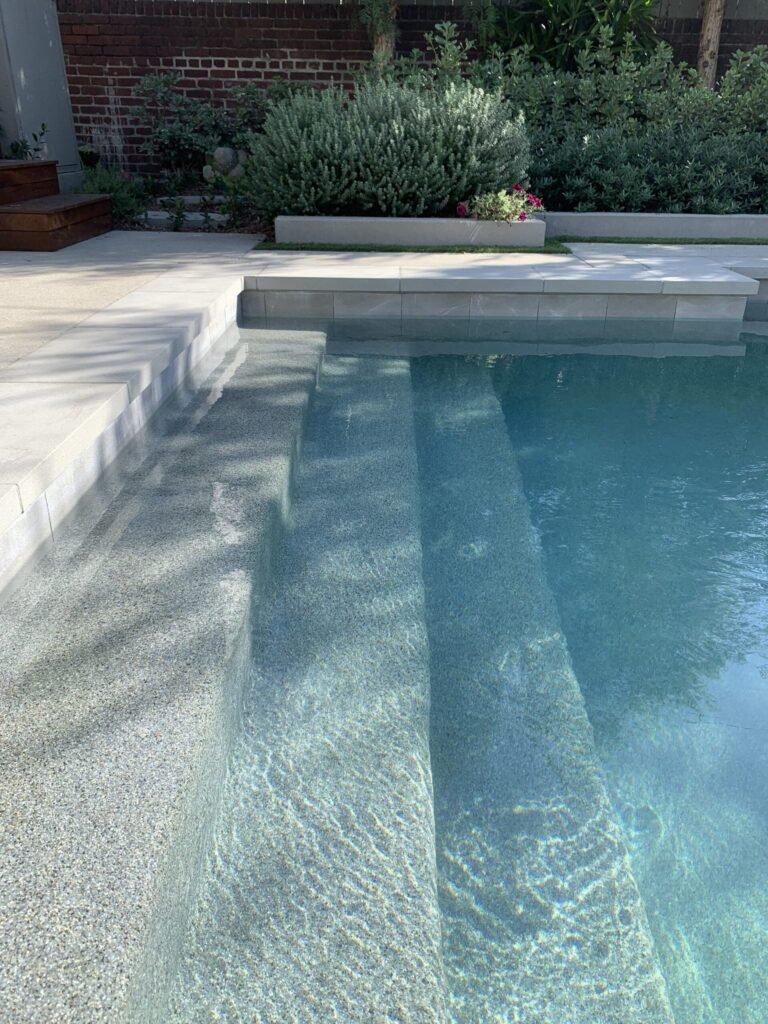
If you already have a pool, the highest-impact upgrade available to you is a raised spa that spills over into the main pool.
The sound of water cascading from the elevated spa into the pool below is immediately and permanently convincing. The visual effect — warm water flowing into the cooler pool surface — reads as resort-tier in a way that’s very difficult to argue with.
Hire a pool contractor with specific spillover experience. Flow rates, basin sizing, and pump specs are precise. Getting them wrong means persistent leaks and pressure issues that are expensive to diagnose and fix.
19. Minimalist Gravel-Base Installation
Sometimes the most powerful design choice is the simplest one.
Level a compacted gravel pad. Set a quality freestanding jacuzzi on it. Place a single Japanese maple or specimen grass beside it. Mount a towel hook on the nearest fence post. Stop adding things.
No construction project, no landscaping timeline, no contractor coordination. Just a well-chosen tub in a clean setting where quality and restraint speak for themselves.
This approach is ideal for renters, for modest budgets, and for anyone who has noticed that simpler usually looks better.
20. Wi-Fi Connected Smart Hot Tub
The best hot tub is the one you actually use every week. App connectivity is what creates that habit.
Modern smart jacuzzis let you adjust temperature, jet intensity, lighting, and filtration schedules from your phone. Start heating on the drive home. Schedule filter cycles for 3 AM. Set the lights to shift to warm amber twenty minutes before you walk outside.
Friction is the enemy of consistent use. Remove it, and the hot tub stops being an occasional treat and becomes part of how you end every day worth ending well.
What to Get Right Before You Build
Twenty ideas, one yard, and a handful of planning details that separate beautiful setups from expensive mistakes.
Drainage. Hot tub zones are constantly wet. Without proper slope and drainage built into the design, you’ll have standing water, algae, and slippery surfaces by the end of the first season.
Equipment access. The most elegant built-in installation becomes a contractor’s nightmare when a pump fails and nobody can reach the equipment bay. Design access panels into the build before construction begins — retrofitting them afterward costs five times more.
Dedicated electrical circuit. Full-size jacuzzis require a 220–240V GFCI-protected circuit installed by a licensed electrician with specific hot tub experience. Extension cords are not an option. Standard household outlets are not an option.
Engineered foundation. A loaded hot tub with occupants weighs between 3,000 and 4,500 pounds. Grass compresses. Soil shifts. You need reinforced concrete, properly compacted base material, or a structurally rated deck designed for the load.
Handle these four things correctly and your setup will run without major incident for a decade or more. Skip any one of them and you’ll spend that decade managing the fallout.
The Backyard You’ve Been Postponing
Twenty ideas. Your yard. One good decision.
You don’t need to build all of them. You don’t need to build two. The homeowners with the best backyards almost always started with a single strong idea and committed to it completely.
Go back through the list. Which one made you pause?
That’s your project.
The gap between the backyard you have and the one you want isn’t a budget problem. It’s not a time problem. It’s a decision problem. Make it, and everything else follows.
Your yard is ready when you are.